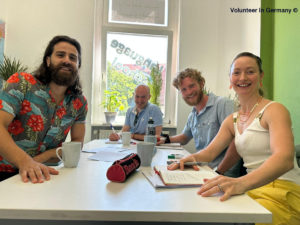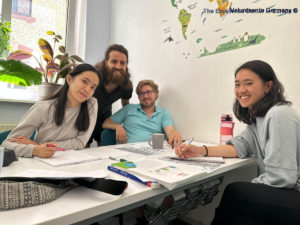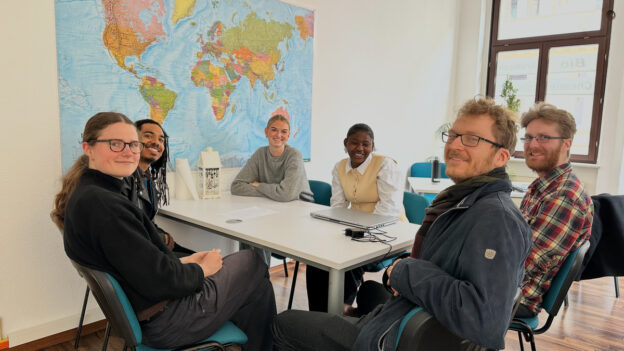
When the days get shorter and the first frost settles over the rooftops, Germany shows a side of itself that summer visitors rarely see. Christmas markets fill the old town squares, cafés become warm meeting points, and daily life moves indoors, where conversation takes center stage. For anyone who wants to learn the language, this is the season when German stops being a subject in a textbook and becomes the tool you need to order a mulled wine, ask for directions on a snowy evening, or chat with your neighbors.
Winter intensive German courses in Germany give you the chance to turn those everyday moments into lessons. At Volunteer in Germany, located in the historic city of Halle (Saale), we welcome international students throughout the colder months for focused, small group German instruction. You choose how long you stay, how many hours you study each week, and when you arrive, while our teachers build each course around your level and goals.
This guide walks you through everything you need to know before you book: the course formats we offer, the levels you can study, what a typical winter day looks like, what the fees include, and how to apply. Whether you are a complete beginner or preparing for university study in Germany, you will find a winter program that fits.
Table of Contents
Why Learn German in Germany During the Winter?
Many learners assume summer is the best time to study abroad, but winter has real advantages for language learning. With fewer tourists in the streets and fewer outdoor distractions, students tend to spend more time in class, in study groups, and in conversation with locals. The pace of the city slows down, and that calm makes it easier to concentrate on grammar, vocabulary, and pronunciation.
Winter also brings some of the richest cultural traditions in the German calendar. Advent, Christmas markets, New Year’s Eve celebrations, and carnival season in February all come with their own vocabulary, songs, foods, and customs. Experiencing these traditions firsthand gives you context that no online course can replicate, and it gives you endless topics to practice in class.
Finally, studying in winter is a smart choice for students and professionals with fixed schedules. University semester breaks, end of year vacation days, and quieter work periods often fall between December and March, which makes it easier to fit an intensive German course into your calendar without sacrificing your other commitments.
Halle (Saale): A Compact City for a Winter of Study
Our language school is located in Halle (Saale), a university city in the state of Saxony-Anhalt in central Germany. Halle is large enough to offer theaters, museums, concerts, and a lively student scene, yet compact enough that you can walk or take a short tram ride almost anywhere. For learners, this is ideal: you spend less time commuting and more time practicing German.
Halle is the birthplace of the composer George Frideric Handel, and his former home is now a museum. The city is also home to Moritzburg Castle, which houses an art museum, and to the medieval ruins of Giebichenstein Castle overlooking the Saale River. In winter, the market square around the Red Tower hosts a festive Christmas market that becomes a natural meeting point for students after class.
Because Halle is not a major tourist destination, you will hear German all around you rather than English. That constant exposure is one of the biggest benefits of choosing a smaller city over Berlin or Munich. If you would like to learn more about the city before you arrive, take a look at our brief information about Halle (Saale).
Intensive and Non-Intensive Winter German Courses
We offer two main formats for our in-person winter German courses, so you can decide how much time you want to dedicate to the language each week. Both formats follow the same curriculum, are taught by experienced teachers, and take place in small groups or one-on-one, with classes of one to five students.
Intensive German Course: 20 Hours per Week
The intensive course is designed for learners who want to make fast, measurable progress. Classes run Monday to Friday for a total of 20 hours per week, with lessons lasting 45 minutes each and short breaks in between. The schedule covers all four core skills: speaking, listening, reading, and writing, with plenty of time for conversation practice and grammar review.
This format suits students preparing for university admission, professionals relocating to a German speaking country, and anyone who wants to move up a full level in a short period of time. You can read the full program description on our Study German in Germany program page.
Non-Intensive German Course: 12 Hours per Week
The non-intensive course offers 12 hours of instruction per week spread over three days. You choose which three weekdays suit you best, leaving the rest of your week free for exploring Halle, traveling around Germany, or combining your studies with volunteering.
This option is a great fit for learners who want steady progress without a full time study load, as well as for participants who are joining one of our volunteer programs and want structured German lessons alongside their placement.
Private Lessons and Online Courses
If you prefer a fully personalized schedule, private one-on-one lessons are also available, and extra weekly hours can be added to either course format. For students who want to prepare before they travel or keep their German active after returning home, we also offer online German courses in packages of 10, 20, 30, or 50 hours.
Course Levels From A1 to B2
Every student takes a free placement test before the course begins, so you are placed in the right level from the first day. Our winter German courses cover four levels of the Common European Framework of Reference for Languages.
Starter Course (A1)
The starter level is for complete beginners. You will learn the alphabet and pronunciation, how to introduce yourself, numbers, dates, and times, and the basic sentence structures you need to handle everyday situations such as shopping, ordering food, and asking for directions.
Beginner Course (A2)
At A2, you expand your vocabulary and begin working with past tenses, separable verbs, and more complex sentences. Lessons focus on describing your routine, talking about past experiences, and handling common tasks like making appointments or booking a ticket.
Intermediate Course (B1)
The intermediate level helps you move from survival German to real conversation. You will practice expressing opinions, telling stories, and understanding the main points of radio, television, and written texts on familiar topics. B1 is also a common requirement for many work and residence purposes in Germany.
Upper Intermediate Course (B2)
At B2, you work toward fluency and precision. Lessons cover complex grammar, formal and informal registers, and discussions on abstract or professional topics. This level is often required for university study in Germany and prepares you for more advanced certification.
Winter German Course: Overview
| Detail | Information |
|---|---|
| Location | Halle (Saale), Saxony-Anhalt, Germany |
| Season | Winter, with courses running year-round |
| Duration | 1 to 13 weeks |
| Start dates | Flexible, chosen by the student |
| Application deadline | None |
| Intensive course | 20 hours per week, Monday to Friday |
| Non-intensive course | 12 hours per week, three days of your choice |
| Lesson length | 45 minutes |
| Class size | 1 to 5 students |
| Levels | A1, A2, B1, B2 |
| Placement test | Free |
| Minimum age | 16 (minors need parental consent) |
| Degree required | No |
| University credit | Available on request |
| Certificate | Certificate of completion |
Fees and What They Cover
Our winter German courses are priced per week, so you only pay for the time you study. The intensive course costs 600 € for one week, 1,200 € for two weeks, 1,800 € for three weeks, and 2,400 € for four weeks. The non-intensive course starts from 470 € per week. A one-time registration fee of 50 € secures your place and is included in your invoice. Please note that an additional 50 € per week applies to stays between May and late December, so a course that starts in December will include this seasonal surcharge for those weeks.
Every student receives a free placement test, a guided tour of Halle, pre-departure and in-country support from our team, and a certificate of completion at the end of the course. Accommodation can be arranged as an optional add-on, with private rooms or apartments located about 20 minutes from the center. For a full overview of program prices, including online packages, visit our price list.
If you need university credit for your course, let us know when you apply, and our team will provide the documentation your home institution requires.
Who Joins Our Winter German Courses?
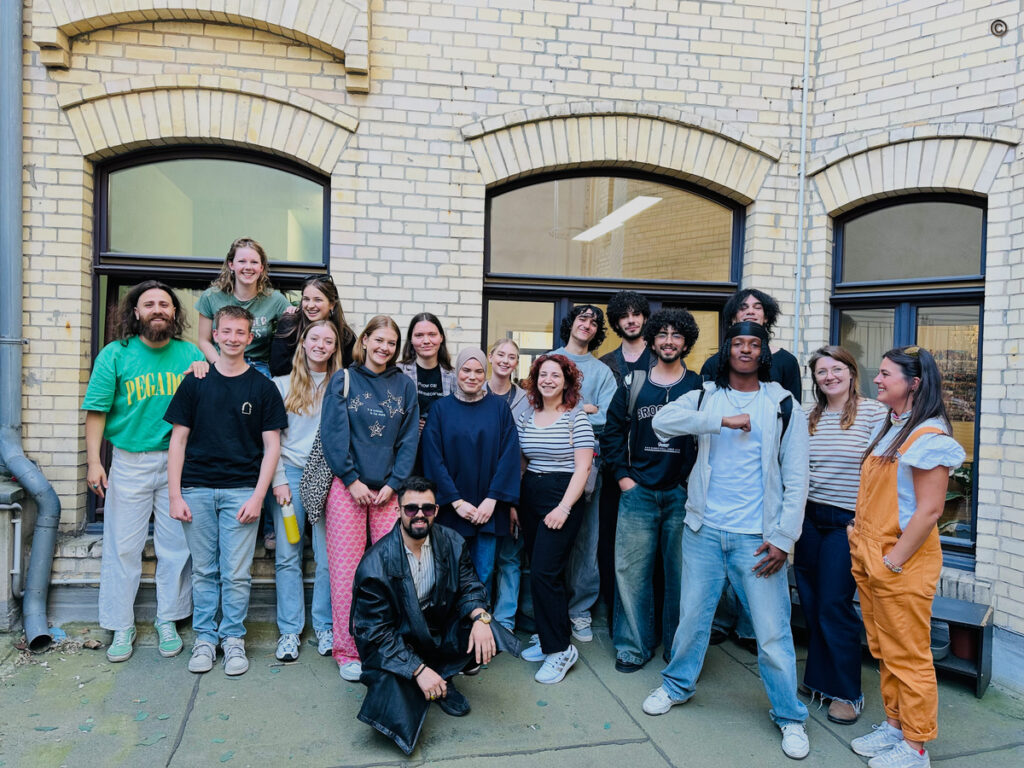
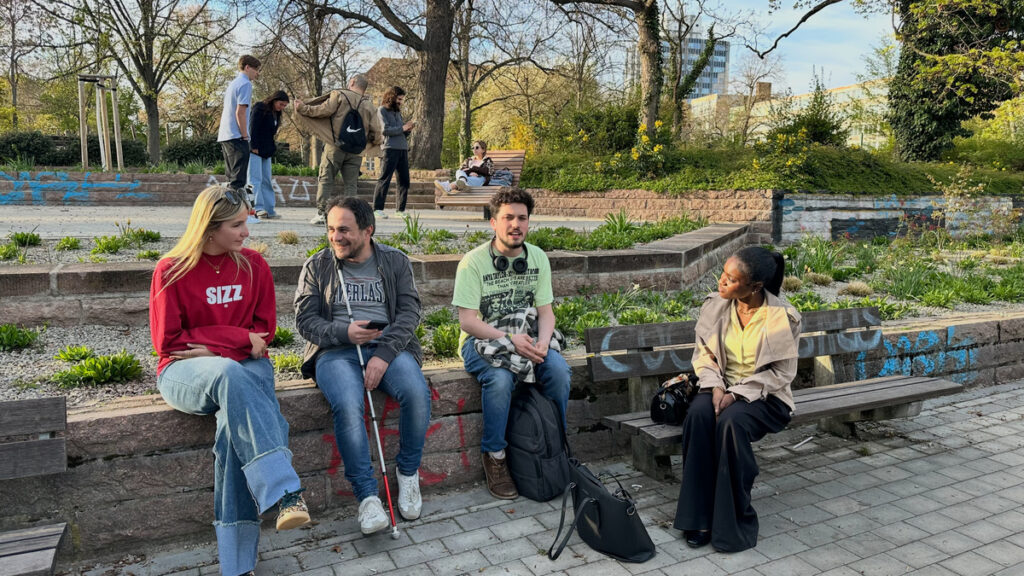
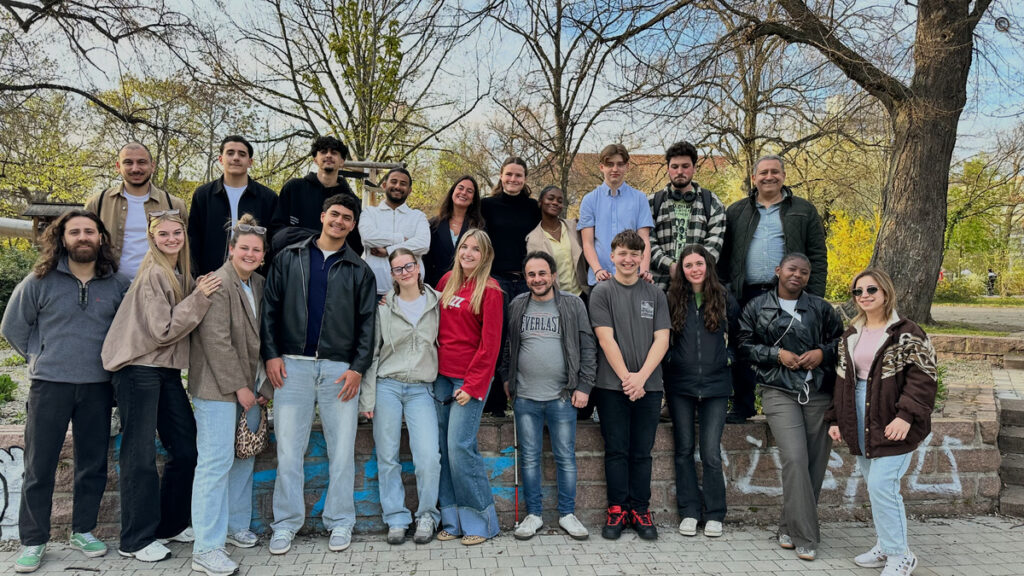
Our classrooms bring together learners from all over the world. Over the winter months, you are likely to share your class with university students on semester break, graduates planning to study or work in Germany, professionals relocating for a new job, retirees who have always wanted to learn the language, and travelers who simply love German culture.
No academic degree is required to join a course, and all nationalities are welcome. Students aged 16 and over can apply, with parental consent required for minors. This mix of backgrounds is one of the things our students value most, since it gives you the chance to practice German with people who have very different reasons for learning it.
A Winter Day as a German Student
A typical day starts with breakfast at the center, where students and volunteers gather before class. This informal time is a good opportunity to practice a few phrases, plan your afternoon, and get to know the people you will be studying with.
Classes take up the main part of the day. In intensive courses, the morning and early afternoon are dedicated to structured lessons that mix grammar, vocabulary, listening, and plenty of speaking. Teachers bring winter themes into the classroom whenever they can, from Advent traditions to seasonal recipes, so the language you learn is the language you hear outside.
After class, the rest of the day is yours. You might warm up in a café near the market square, visit the Handel House or the art collection at Moritzburg, browse the Christmas market stalls, or meet a local tandem partner for conversation. Many students also join social activities at the center, which give you even more chances to use your German in a relaxed setting.
Tips for Making the Most of Your Winter German Course
A few simple habits can make a big difference to how much German you take home with you. First, set yourself a clear goal before you arrive, whether that is passing a level, holding a 10 minute conversation, or understanding the evening news. Share it with your teacher on the first day so the lessons can be shaped around it.
Second, use the city as your classroom. Read shop signs, menus, and posters, and try to handle every small transaction in German, even if it feels slow at first. Winter offers plenty of natural conversation starters, from the weather to holiday plans, and most people are happy to chat with a learner who makes the effort.
Third, keep a small notebook or app for new words and review it every evening. Ten minutes of revision a day helps new vocabulary stick far better than a long session at the end of the week. Finally, find a tandem partner, a German speaker who wants to practice your language in exchange. It is one of the easiest ways to get extra speaking time, and many tandem partnerships turn into lasting friendships.
Combine Your German Course With Volunteering
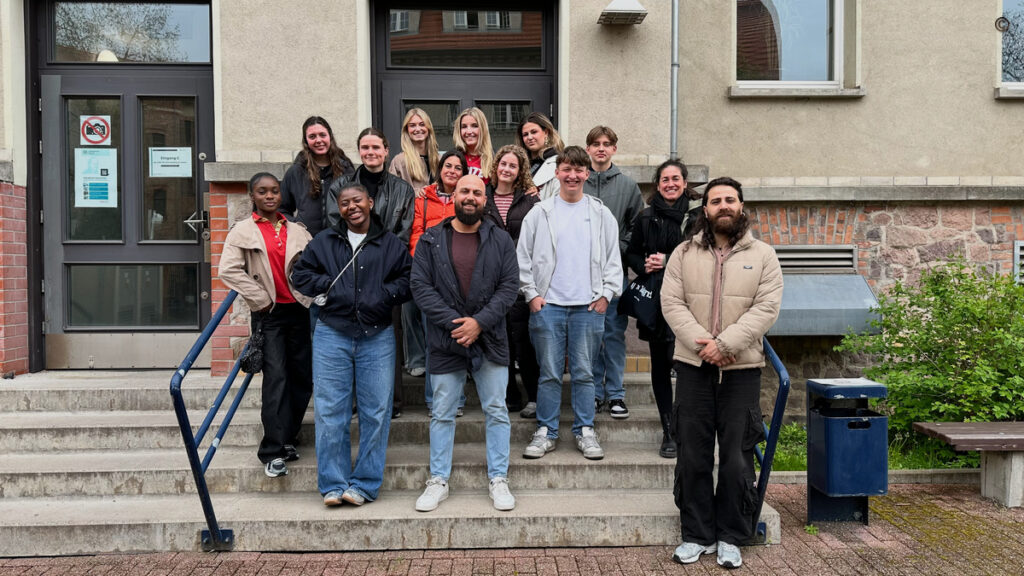
One of the most rewarding ways to spend a winter in Germany is to pair your German lessons with meaningful volunteer work. Volunteer in Germany runs volunteer and internship programs alongside its language courses, and many students choose to combine the two.
Our Volunteer to Teach English and Study German program is especially popular with fluent English speakers. You support English learners in the Halle community while taking German lessons yourself, which means you are both teaching and learning every day. Volunteering also connects you with locals, refugees, and immigrants, giving you an inside view of life in a modern German city and countless opportunities to practice the language in real situations.
Getting to Halle in Winter
Halle is well connected to the rest of Germany and Europe, which makes it easy to reach even in the middle of winter. The closest airport is Leipzig/Halle Airport, which is about 25 minutes from the city by train. Berlin Brandenburg Airport is roughly one and a half to two hours away, and Frankfurt Airport is about three to four hours away by train.
Once you are in Halle, you are well placed for weekend trips. Leipzig is only about 25 minutes away by train, Berlin is roughly an hour and a half away, and Dresden and Prague can be reached by bus. For detailed travel tips, see our guide on how to get to Halle (Saale), Germany.
Reviews and Community Awards
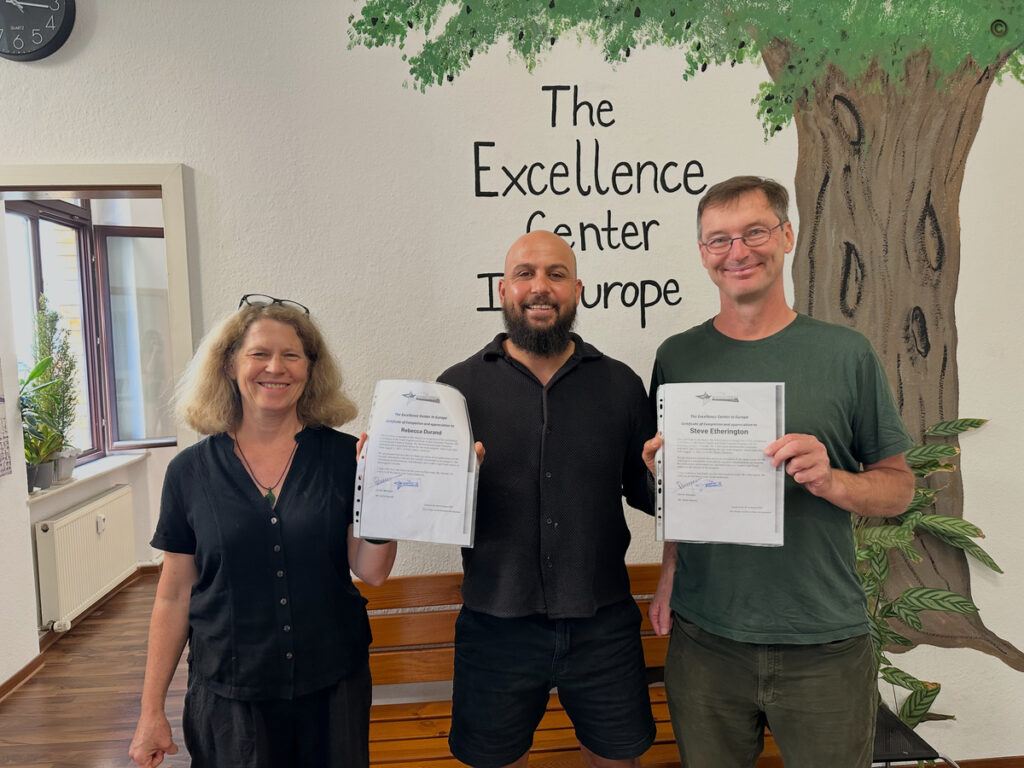
Volunteer in Germany has been honored with several prestigious Community Awards and recognized as the Best Language School and Top Volunteer and Internship Program Provider for 2019, 2021, 2022, 2023, 2024, and 2025. For more details, please visit our profiles on GoOverseas.com and GoAbroad.com.





- +1000 reviews (96.5%) on gooverseas.com
- +190 reviews (96%) on goabroad.com
- Participants’ video testimonials
- Check out our awards
How to Apply for a Winter German Course
Applying is simple. Send an email to Info@eceurope.org with “Study German in Germany” in the subject line, and our team will send you an application form. Once you return the completed form, we will arrange your placement test, confirm your course format and dates, and help you with any questions about accommodation or travel.
Since there is no application deadline and start dates are flexible, you can apply whenever you are ready. That said, we recommend getting in touch a few weeks before your planned arrival, especially if you need help with accommodation or visa documents.
Conclusion
A winter in Germany is about more than cold weather and holiday lights. It is a chance to slow down, focus on learning, and experience German culture at its most traditional. With small classes, flexible schedules, and a city where German is spoken all around you, our winter intensive German courses in Halle (Saale) give you everything you need to make real progress in a short time.
Whether you choose 20 hours a week of intensive study or a lighter 12 hour schedule, and whether you stay for one week or a full season, you will leave with stronger language skills, new friends from around the world, and memories of a German winter. We look forward to welcoming you to Halle.
Find Us Online
Should you have any questions, please do not hesitate to contact us at Info@eceurope.org.
Facebook page: https://www.facebook.com/eceurope
Facebook profile: https://www.facebook.com/rafat.shan.39
Instagram: https://www.instagram.com/ec.europe/
Youtube: https://www.youtube.com/channel/UCsQSLdFZWZcBm6Uj0XMYuKg
Tags: intensive German course in Halle, learn German in winter, study German in Germany, winter German courses in Germany